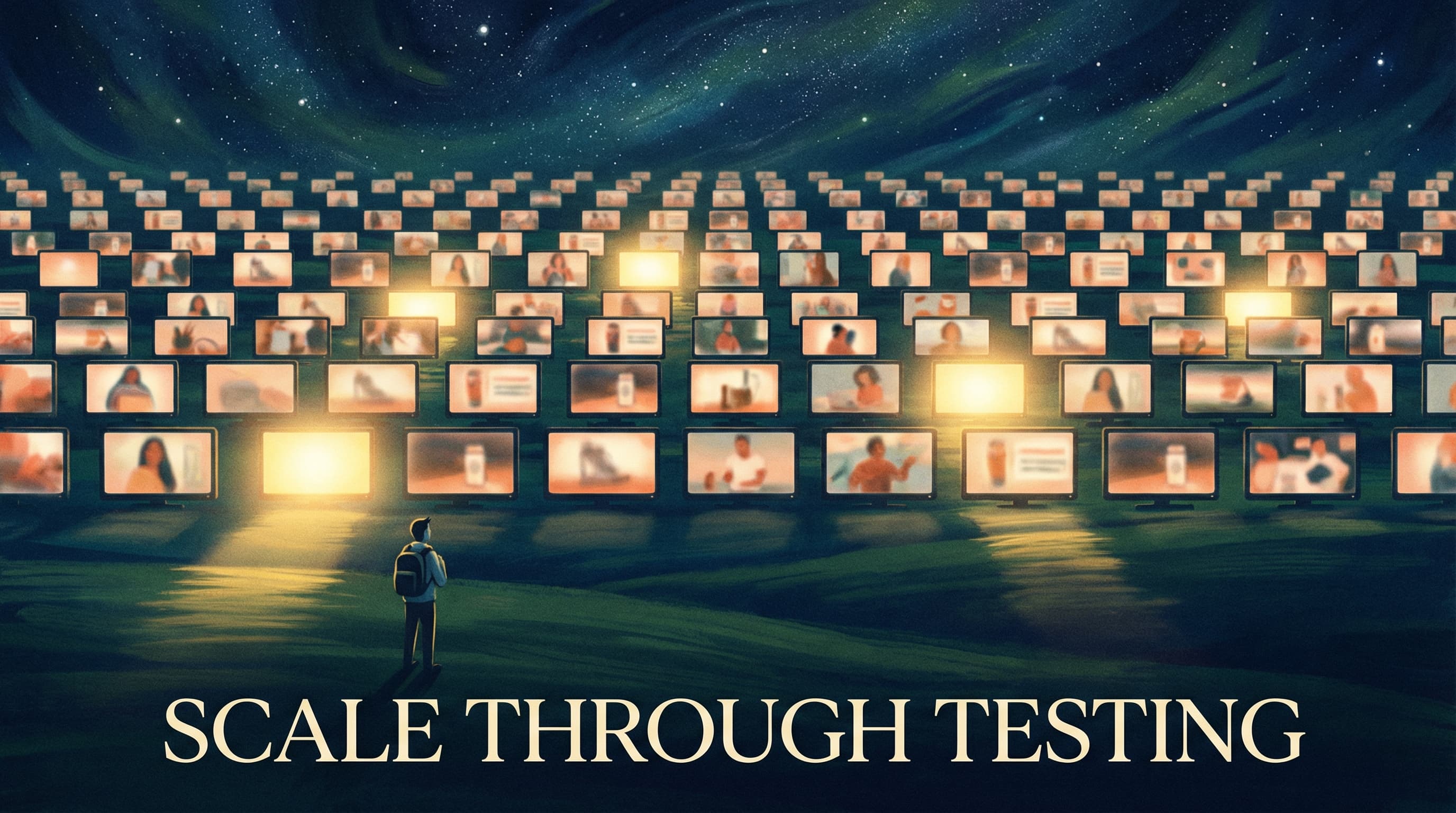

Even if you've tested UGC ads before and saw mediocre results, the problem wasn't UGC — it was treating it like a one-off campaign instead of a systematic content engine. Here's the truth: 81% of ecommerce marketers say real customer visuals outperform polished brand content. But most brands still approach UGC the same way they approach traditional ads. That's the disconnect.
You don't need a bigger budget. You need a repeatable system for planning, creating, testing, and scaling ugc video ads. This guide shows you exactly how to build that system — whether you're working with human creators, AI tools like Adspoke, or a hybrid approach.
What you need to know about UGC video ads
The problem with traditional video ads
Polished studio productions with perfect lighting and scripted testimonials get scrolled past without a second thought. Creative fatigue hits in two weeks. You're stuck in a cycle: spend thousands on production, wait weeks for delivery, launch, watch performance crater, repeat. The real problem isn't creative quality — it's fighting how people consume content in 2026.
What UGC video ads really are
UGC video ads look like something a real person posted organically. Shot on phones. Unpolished. Authentic. They show real people using your product with all the imperfections that make content trustworthy.
They work because they blend into the feed. They feel like a friend's recommendation, not a brand pushing a product. The 2026 shift: you can now generate authentic UGC at scale using AI actors, test dozens of variations simultaneously, and identify winners before spending meaningful budget. The strategy remains the same whether using human creators or AI — systematic planning, testing, and scaling.

How to build your UGC video ad strategy: Step by step
Step 1: Define your creative testing framework
Start by deciding what you're testing. Most brands waste budget testing random variables. Instead, identify the three creative hypotheses that matter most for your product: hooks (the first 3 seconds), product angles (benefit emphasized), and creator archetypes (who's delivering the message).
Build a testing matrix. If you're testing 3 hooks × 3 angles × 2 creator types, that's 18 variations. Your goal isn't to create content. It's to discover which combinations drive the metrics you care about — typically click-through rate and cost per acquisition.
Pro Tip: Use your existing customer reviews and DMs as hook inspiration. The language real customers use to describe your product will outperform anything your marketing team writes.

Step 2: Brief for authenticity (not perfection)
The brief is where most UGC strategies fall apart. Brands write creative briefs the same way they brief traditional agencies — detailed shot lists, specific messaging, brand guidelines. This kills authenticity.
Write briefs that give creators constraints, not scripts. Specify the product benefit to emphasize, the rough video structure (problem → demo → result), and 2-3 talking points. Then let creators use their own words. The rawness is the point.
When using AI tools like Adspoke, the same principle applies. Don't over-engineer the prompt. Give the AI actor a clear scenario ("You've been using this skincare product for two weeks and just noticed your skin is clearer") and let the delivery feel natural.
Pro Tip: Include 1-2 example videos in your brief that capture the vibe you want — not to copy, but to calibrate expectations around authenticity.
Step 3: Generate and test at scale
Using Adspoke, you can generate 50 UGC video ad variations in an afternoon — different actors, hooks, and angles — all matching your brief. No waiting on creator deliverables.
Launch variations on Meta or TikTok at $5-10 daily per variant. Run for 48 hours. Kill the bottom 70%. Scale the top 30% and create new variations based on winners.
Find 2-3 winning combinations to iterate on. A winning UGC ad drives results for 2-4 weeks before fatigue sets in. When performance dips, launch new variations of proven angles.
Pro Tip: Don't judge creative by personal taste. Trust the data.

Step 4: Measure what matters
Track performance at the variation level, not the campaign level. You need to know which specific hook + angle + creator combination is driving results. This means setting up proper UTM tracking and naming conventions from day one.
Focus on these metrics: hook rate (% who watch past 3 seconds), click-through rate, cost per click, and cost per acquisition. Hook rate tells you if the first 3 seconds work. CTR tells you if the overall message resonates. CPA tells you if it's profitable.
Create a simple testing scorecard. Every week, review which variations won, which patterns are emerging, and which new hypotheses to test next. The brands winning with UGC in 2026 aren't creating better individual ads — they're running better testing systems.
Real example: DTC brand scales from $2K to $50K monthly ad spend
A skincare brand was stuck at $2K monthly ad spend. Every scale attempt spiked their cost per acquisition. The issue? Running 3 polished video ads on repeat.
They switched to UGC testing with Adspoke. Week one: generated 40 variations testing different hooks. Week two: identified 3 winners, killed the rest. Week three: scaled to $50K monthly spend maintaining target CPA.
The key was a repeatable system for finding winners before scaling. When fatigue hit, they launched new variations based on proven patterns.

Your next step
Common mistakes to avoid
Mistake 1: Treating UGC as a one-time campaign instead of an ongoing testing system. You need a regular cadence of new creative, not sporadic bursts.
Mistake 2: Over-polishing UGC to "match your brand." The rawness is what makes it work. If it looks too branded, you've defeated the purpose.
Mistake 3: Scaling creative before validating it. Test small, identify winners, then scale. Not the other way around.
Try this next
Pick one product and one customer segment. Generate 12 UGC video variations testing 3 different hooks and 4 different product angles. Run them for 48 hours at $5/day each. Kill the losers. Scale the winners.
If you want to test this approach without hiring a dozen creators, try Adspoke. You can generate authentic UGC video ads with AI actors, test multiple variations simultaneously, and identify winners before spending your core budget. It's how modern DTC brands are building scalable creative engines in 2026.